Houdini Deep Dive! Overview, Likes, Dislikes, Code

Like what you're reading?
Get pinball news, analysis, and deep dives delivered to your inbox.
Get pinball news, analysis, and deep dives delivered to your inbox.
Last week TWIP had the opportunity to visit Chicago and play the Houdini test game located at Level 257. It is the first game released from American Pinball, and should be shipping very soon. Shall we do a deep dive?? OK, let’s do it!
Below is an in-depth Overview of the machine, and Five Likes and Five Dislikes on American Pinball’s Houdini after putting a few hours of play on the game.
Note: there were a few minor issues on the test game – the catapult shot missed short the first two times and then made it each time afterwards (except one), and a few other things that are not unexpected in the test game (that is why it is a test game after all).
Houdini is a standard body machine and has one model/edition. The price is $6,995. For a list of distributors, click here.
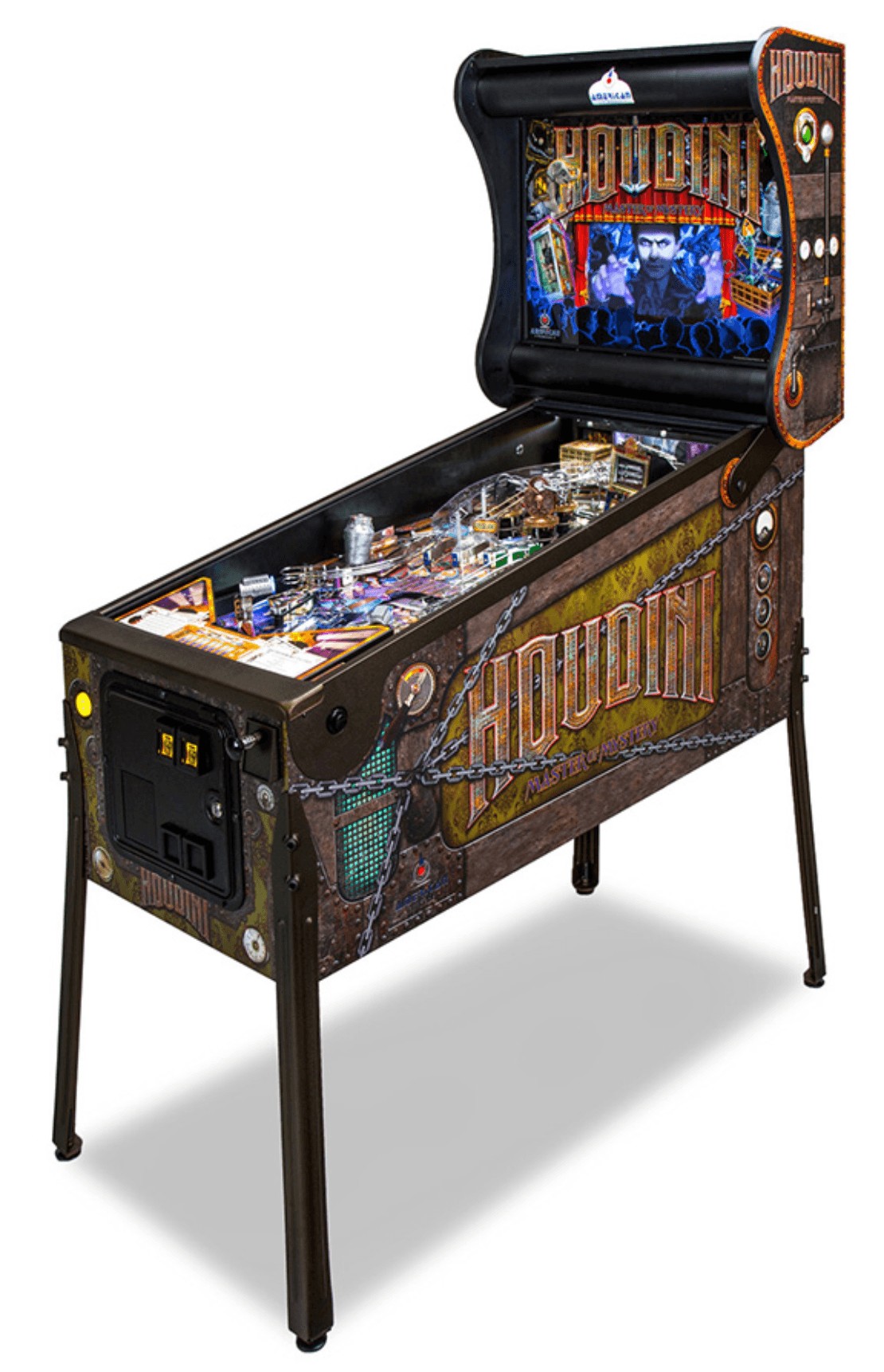

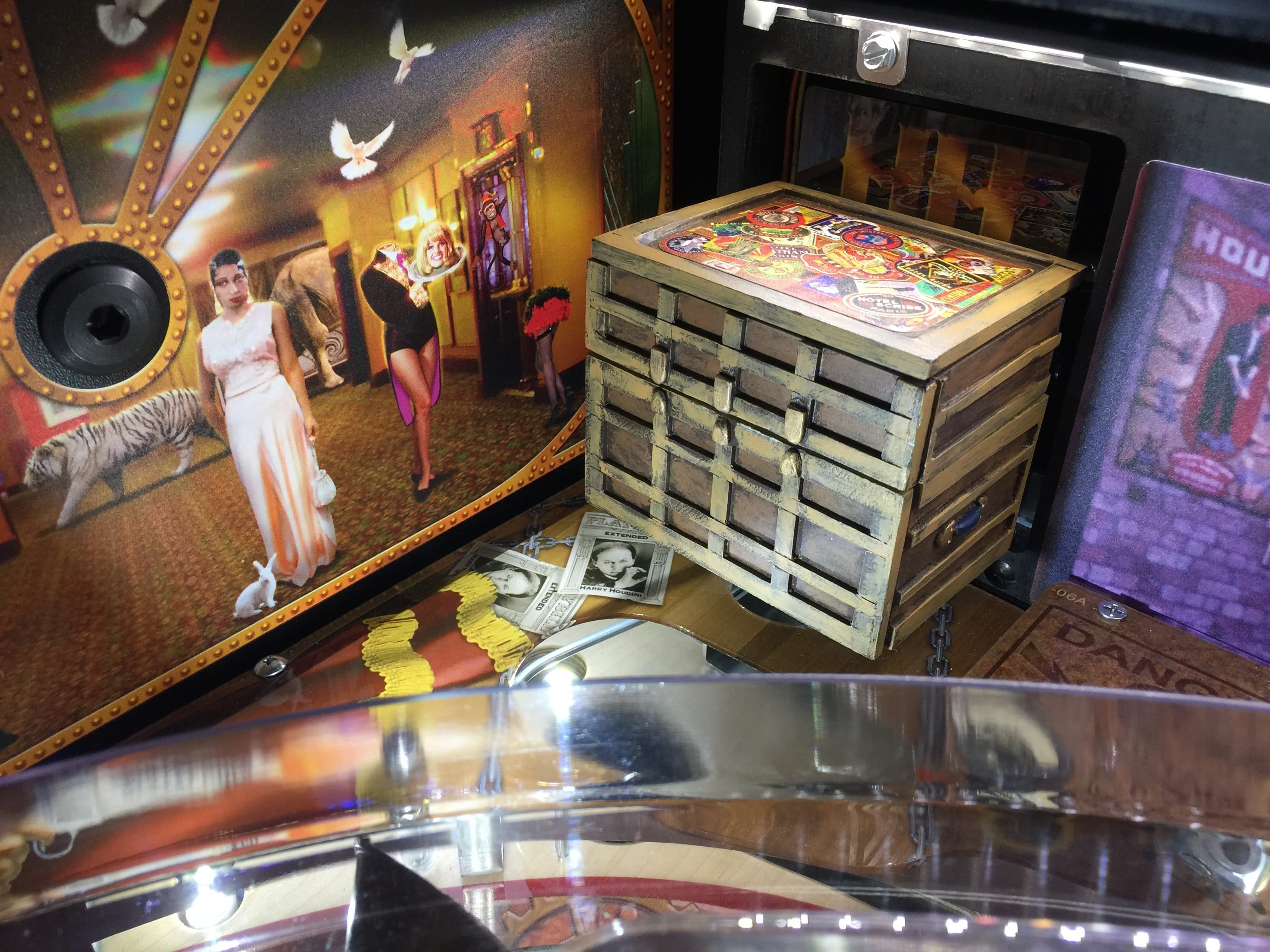
Huge thanks to Josh Kugler for help with this section!
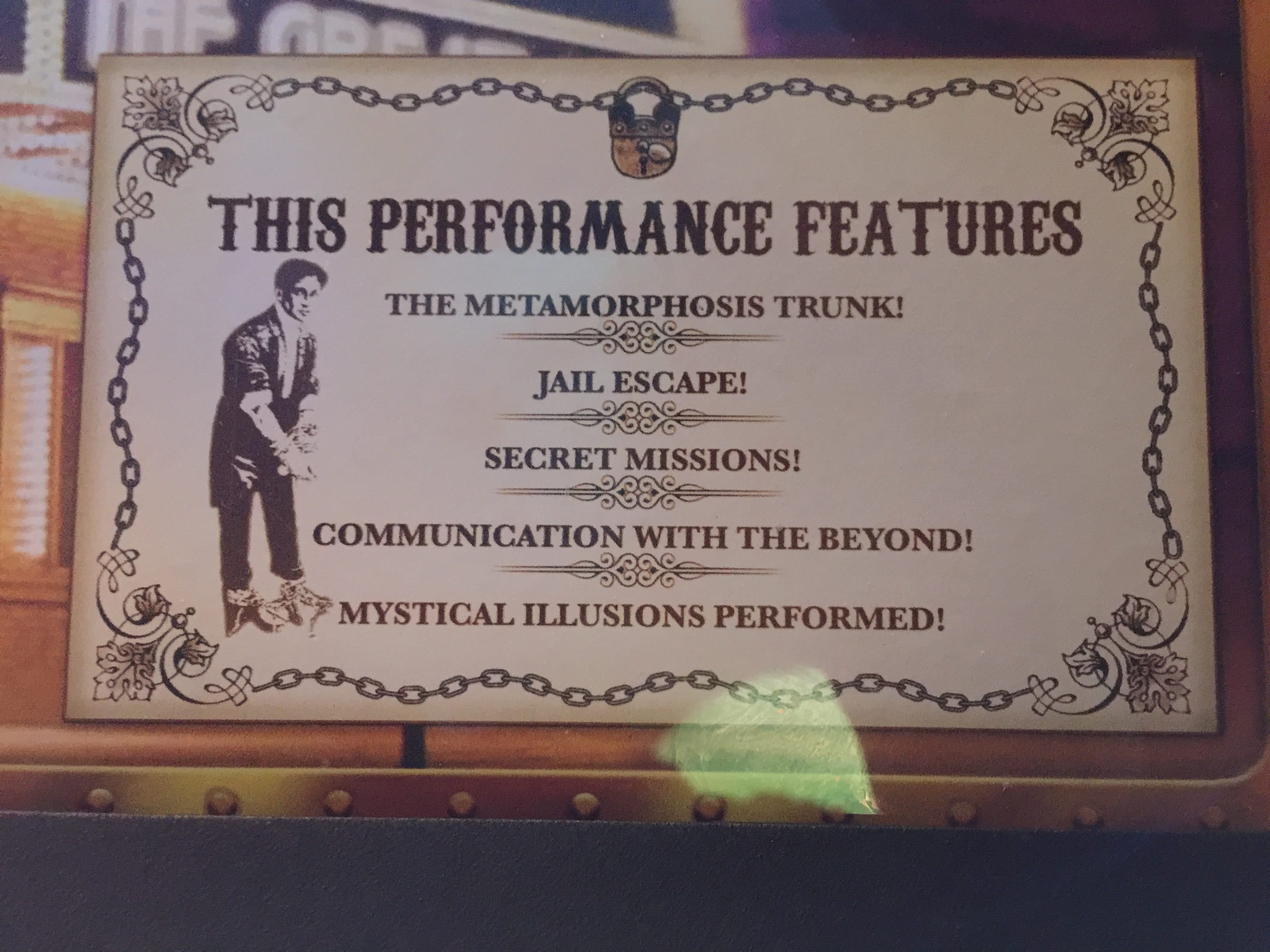
Note: Settings can be changed to make the HOUDINI letters easier.
Stage is opened either by bashing it X times, shooting it through Stage Alley, hitting the Red Standup directly via a shot straight up Key Lane, or hitting the red standup X times off the pops. Starting any stage mode, by shooting the stage through Stage Alley, will double the value of the mode.
There are 10 modes at the stage, seven are “basic modes”, meaning a series of shots to complete. Typically making the required shot will advance you through the illusion/escape as played out on the display. Three are “special modes”. Complete all 10 modes for a HOUDINI letter.
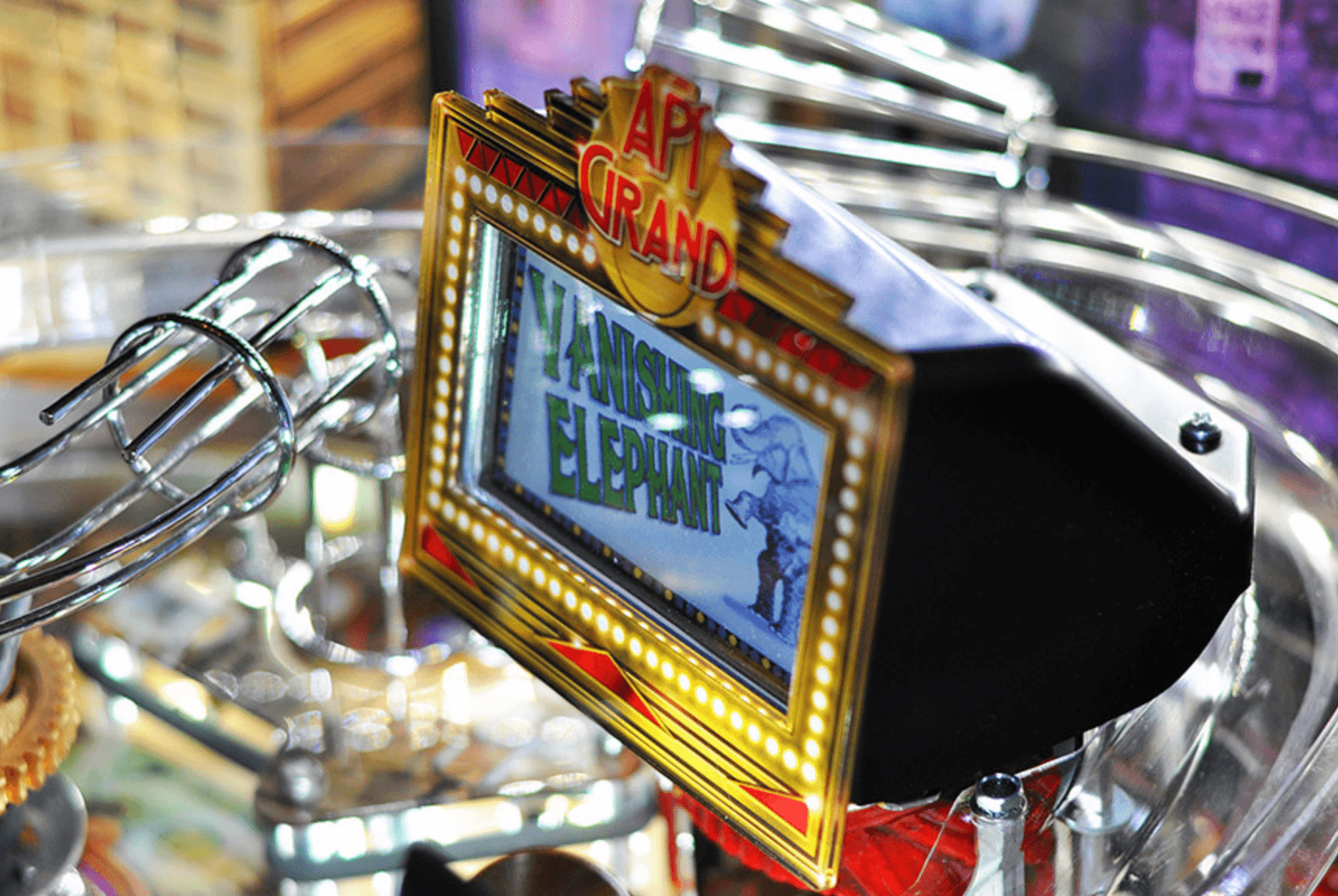
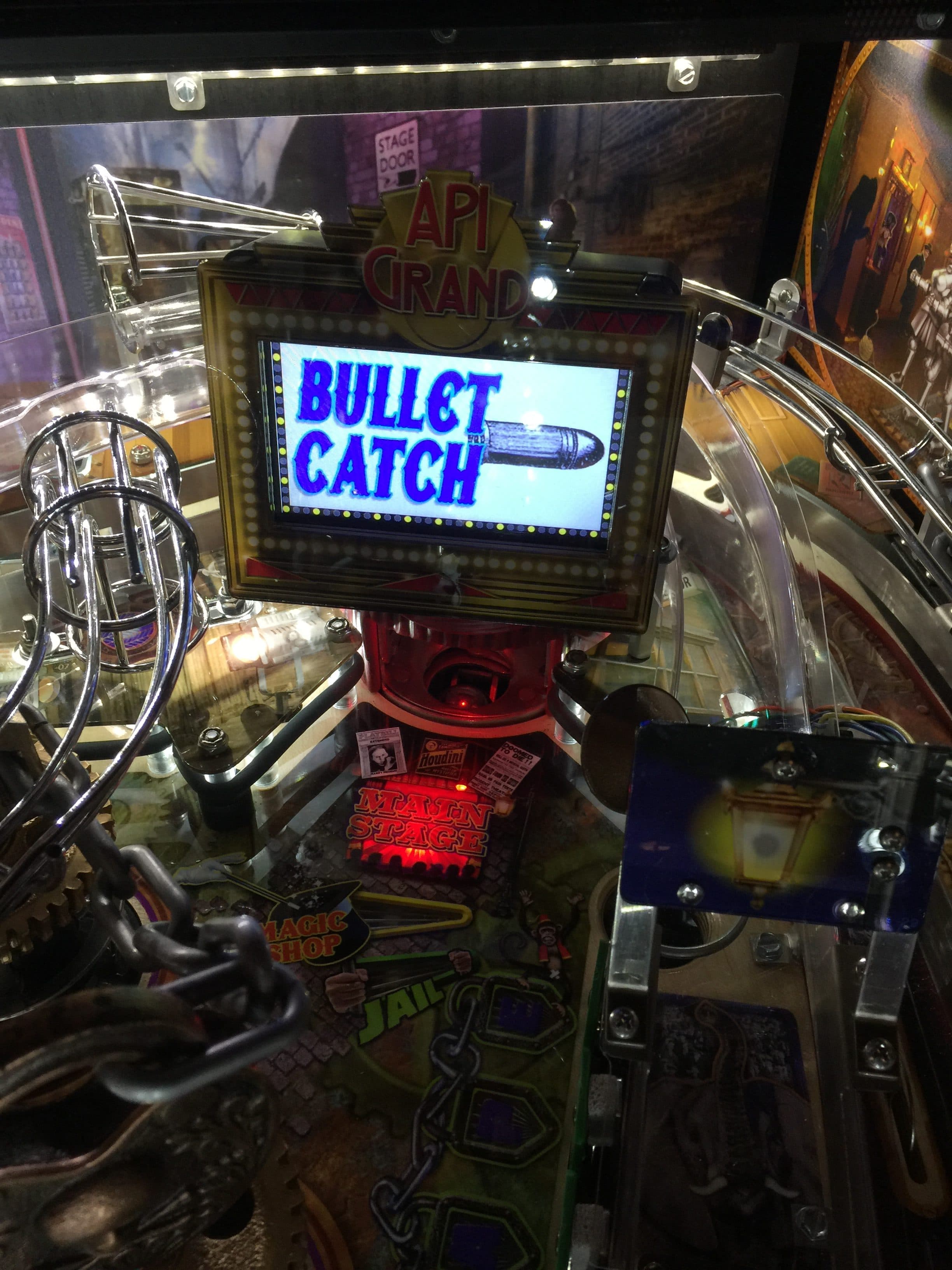
There are five modes based on Houdini’s movies. These modes are presented in black and white with an old film look and have a piano accompaniment. Failing to complete results in the film ‘burning’. One is a type of add-a-ball Multiball. Complete all five for Houdini letter. They are:
NOTE: For most of the stage and movie modes, you can also hit one of the two ‘magic stand-ups’ targets, which are located on either side of the lower playfield to advance a step through the mode. When not in a mode, these targets will assist you in other ways, based on current state, typically adding ESCAPE, SEANCE or FILM letters. They will also trigger the magnets under the hands which will then twirl and throw the ball. There is an optional ball saver (controlled via settings), when the magnets are triggered via the targets (and when not in seance mulitball). Also, for most stage and movie modes, once the timer gets to 10 seconds or less, you can shoot the spinner to add time to the timer. You can up to 10 seconds to the timer.
Open via spinner, earn a ‘mystery’ award — collect eight items to earn Houdini Letter. Can earn an extra ball if enabled via settings. Easter eggs at magic shop.
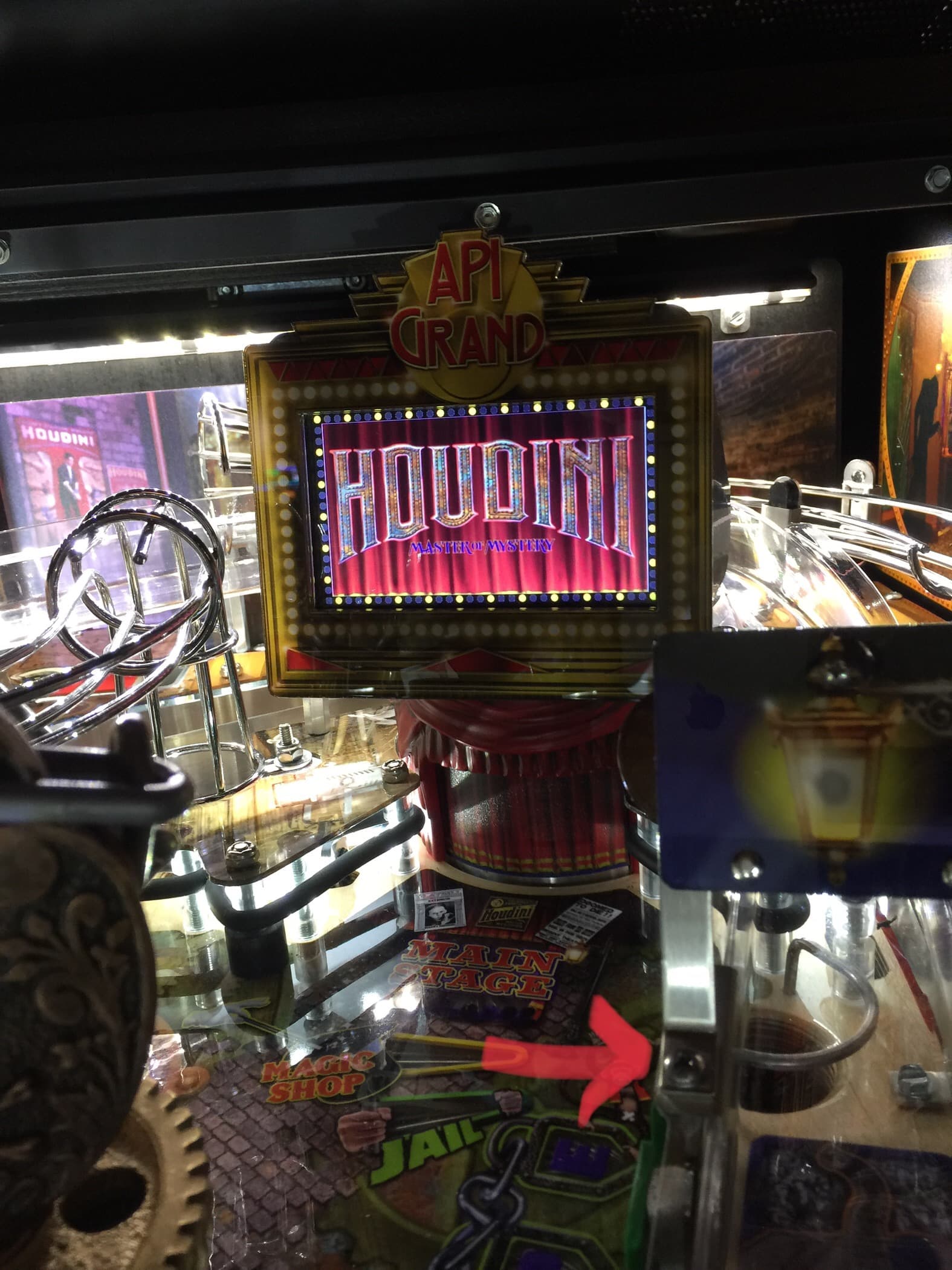
Spell escape via stand-up targets to light, complete all five to earn Houdini letter, complete X to earn Return From Beyond, also possible to earn Extra Ball if enabled in settings. Can be random or easy to hard based on settings. Complete all five for mini-magician mode.
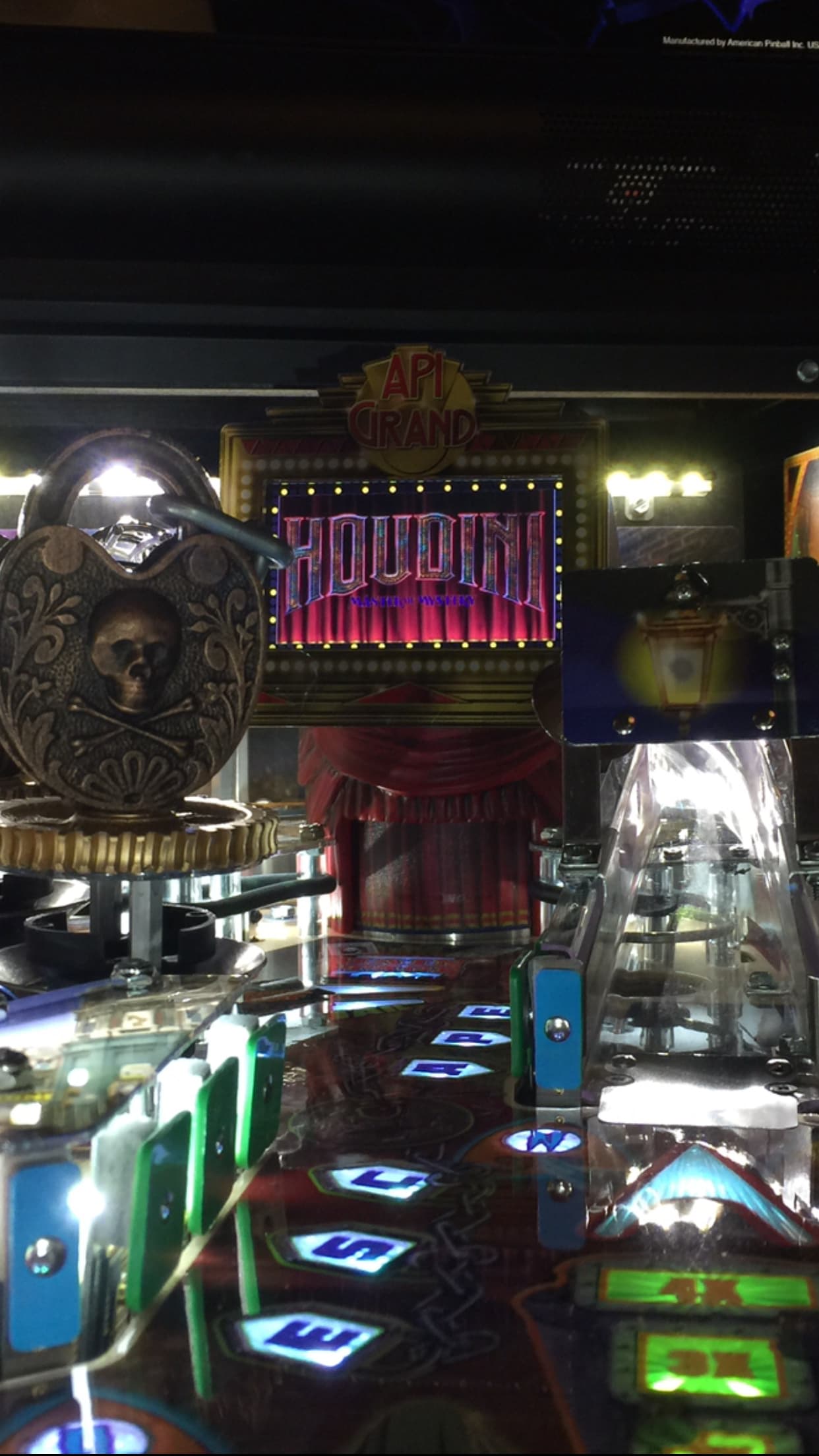
Five different combos. Only one is active at a time, complete it and you can then start the next. Complete all five for a mini-magician mode and a Houdini letter. The next shot in the sequence will be identified with a flashing purple arrow. If the sequence is broken, it will go back to the first shot of the sequence. They get harder as you go.
Lock three balls in the trunk to start, three shots are lit for jackpots, complete those then shoot trunk (via inner loop) to score super jackpot and re-light jackpots. Super Jackpot will earn Houdini letter.
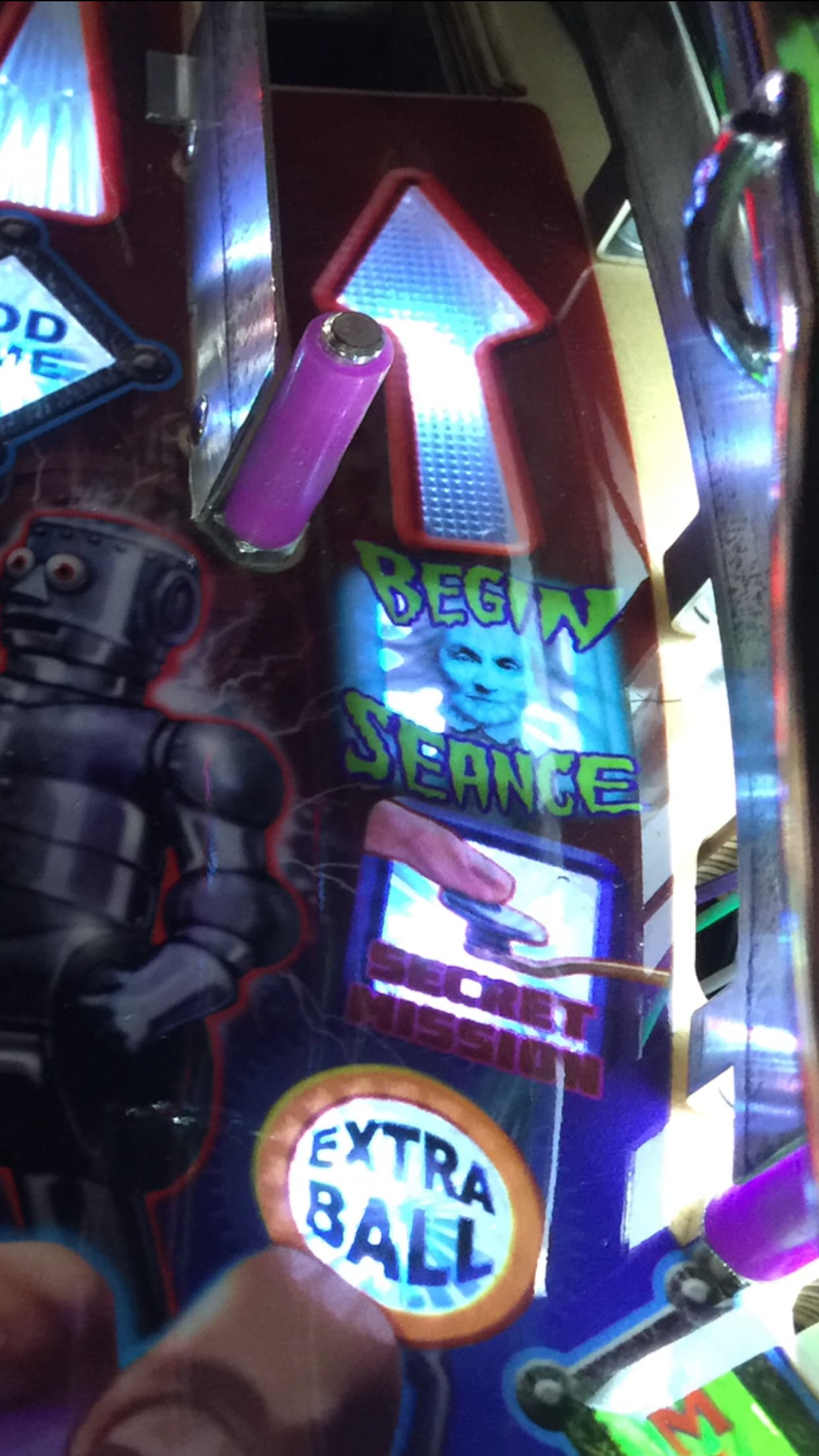
Spell seance to light at the scoop. Spell seance to score jackpots, spell in order for super jackpot (very hard). Gets harder to light each time. X jackpots will earn a Houdini letter.
Complete the task, continue your ball, fail and ball ends. The modes are:
You can also earn/light the outlane drain modes at Magic Shop. If earned there it will bounce from side to side with flippers. If earned via Seance or Escapes, it will not move. If you have earned one plus magic shop version, then both outlines are lit. You can only earn each once per game.
Shooting the milkman loop (lower left loop) immediately followed by the ramp will increase the playfield multiplier (2x,3x,4x) for X seconds.
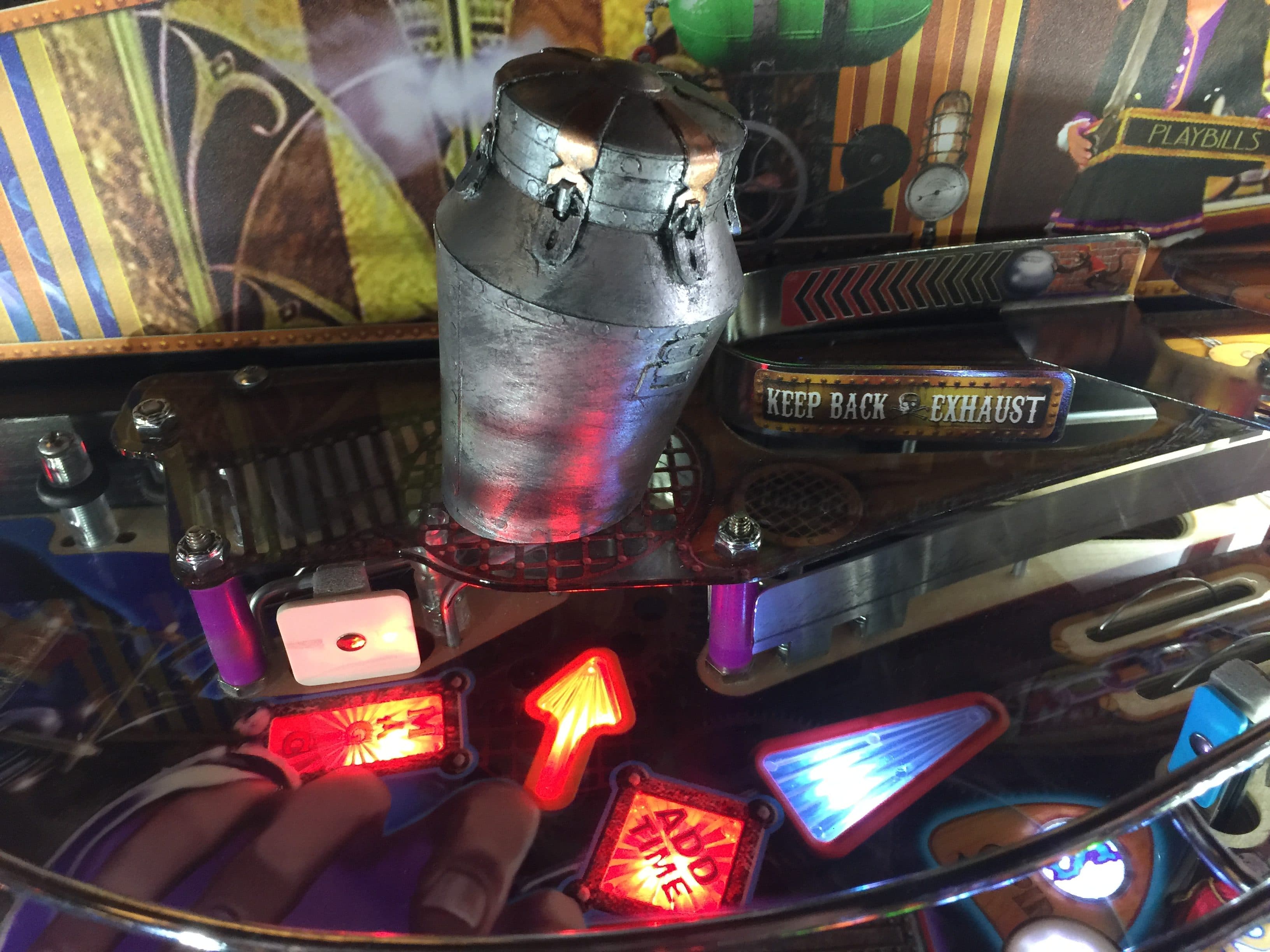
You can stack multiballs on both stage and movie modes as well as other multiballs. Stage modes and movie modes can not be stacked with each other. Once a multiball is running, you can not start a movie or stage mode. Jail Escapes, starting of Secret Missions and Magic shop visits can occur if a mode is running, but not if multiball is running.
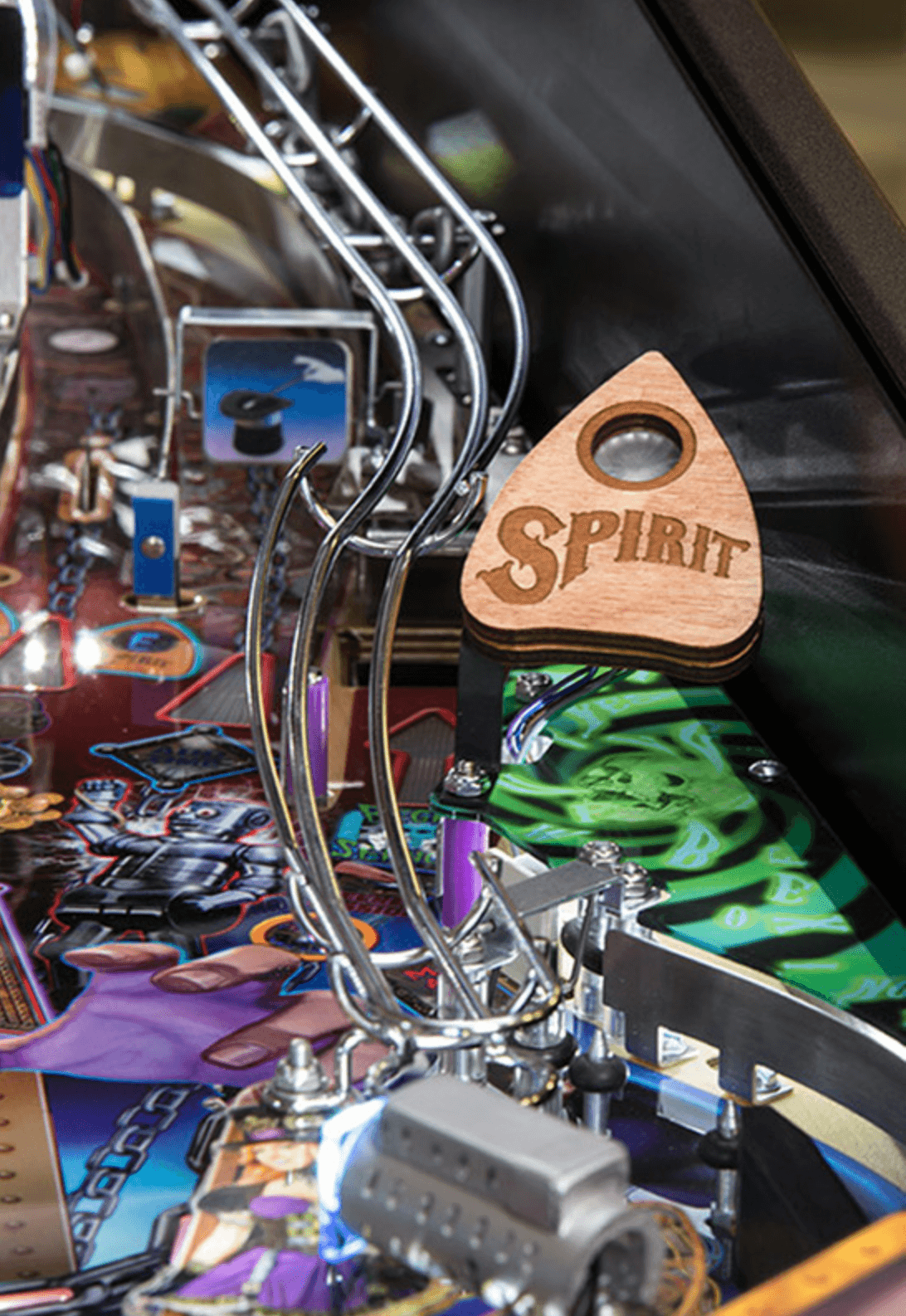
Playing Houdini is straight up fun and the game “feels” magical. The magnets are integrated in a way that will entertain hardcore hobbyists as well as casual players. The trunk shot catapult is the same way. The way the machine is designed, after shooting a ball into the theater and other areas, the ball feels like it can reappear from anywhere to be put back into play. And with the stage/theater, the display, the audience (who is not afraid to boo if you lose a ball!) – the whole experience makes you feel like you’re part of a magic show.
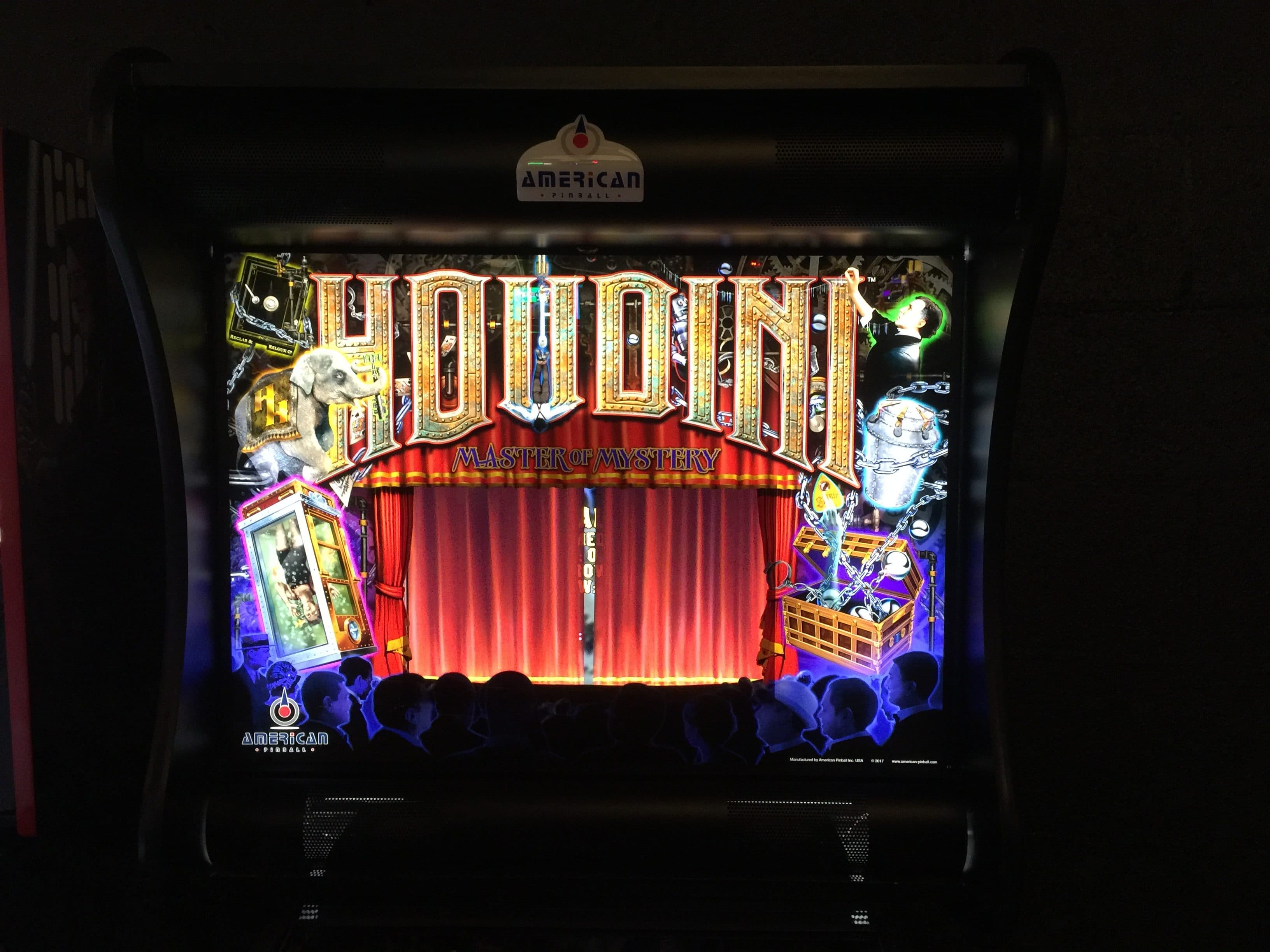
The display on Houdini is slightly higher than you’re probably used to, but that is to accommodate for the audience that is viewing the display, which acts as a stage. And it is very well-integrated into the theme. You start, the curtains open. You drain and they close. Start a stage mode and an animation appears on the screen. All modes give significant instruction on the display. It is just well done. There has been some concern that there aren’t enough animations included, but how many do you need?
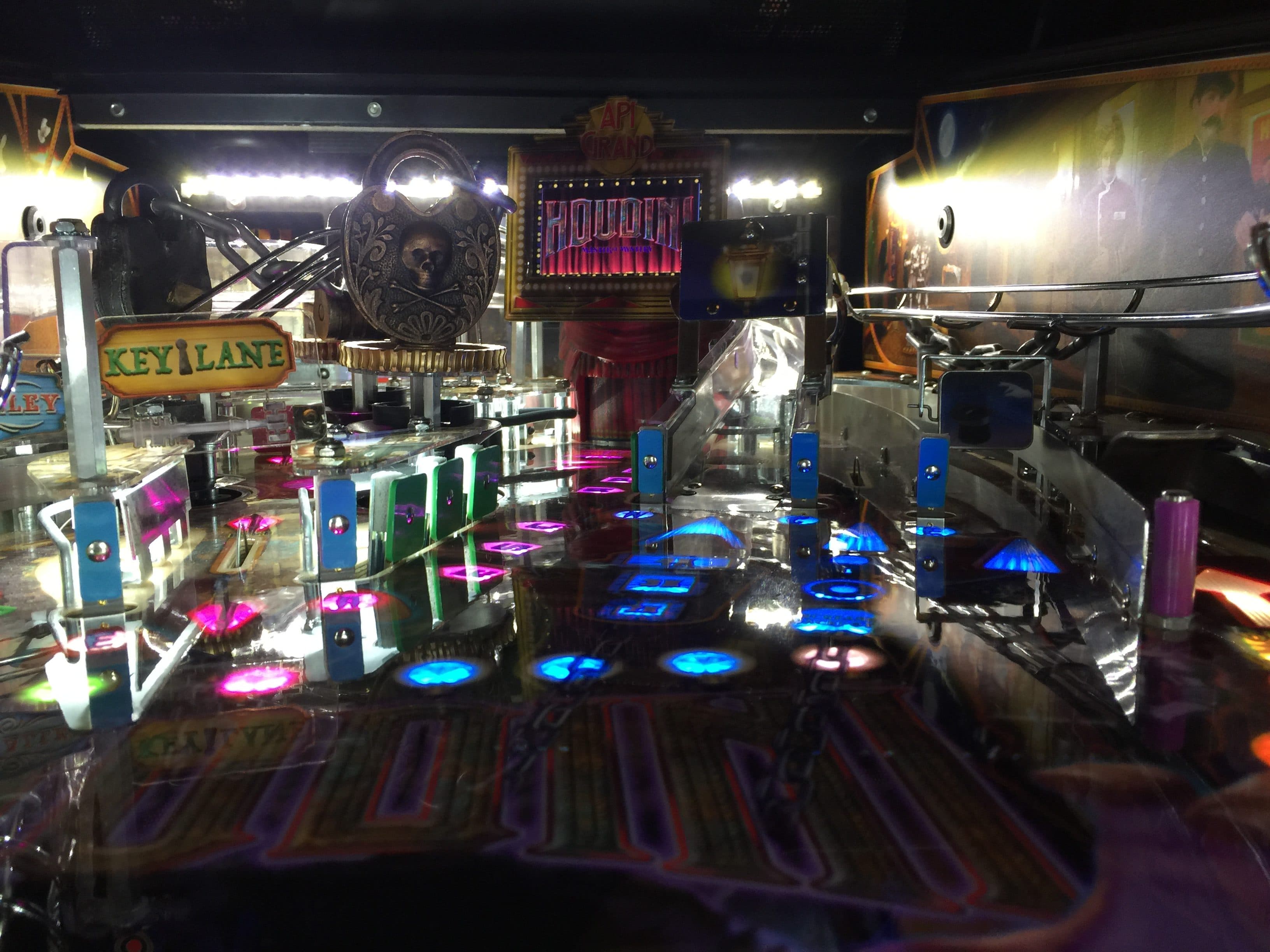
The creators of this machine did extensive research on Houdini, and not just his career as a magician/illusionist. Just a few examples of Houdini’s life and what is included in the game:
The music and sound really helps set the mood (love the sounds the pop bumpers make). The rules, playfield features, lightshow, display, and sculptures in the game really help draw the player into Houdini’s life.
We’ve covered the rules quite a bit already, but they give good depth and breadth to the game without being overly complex.
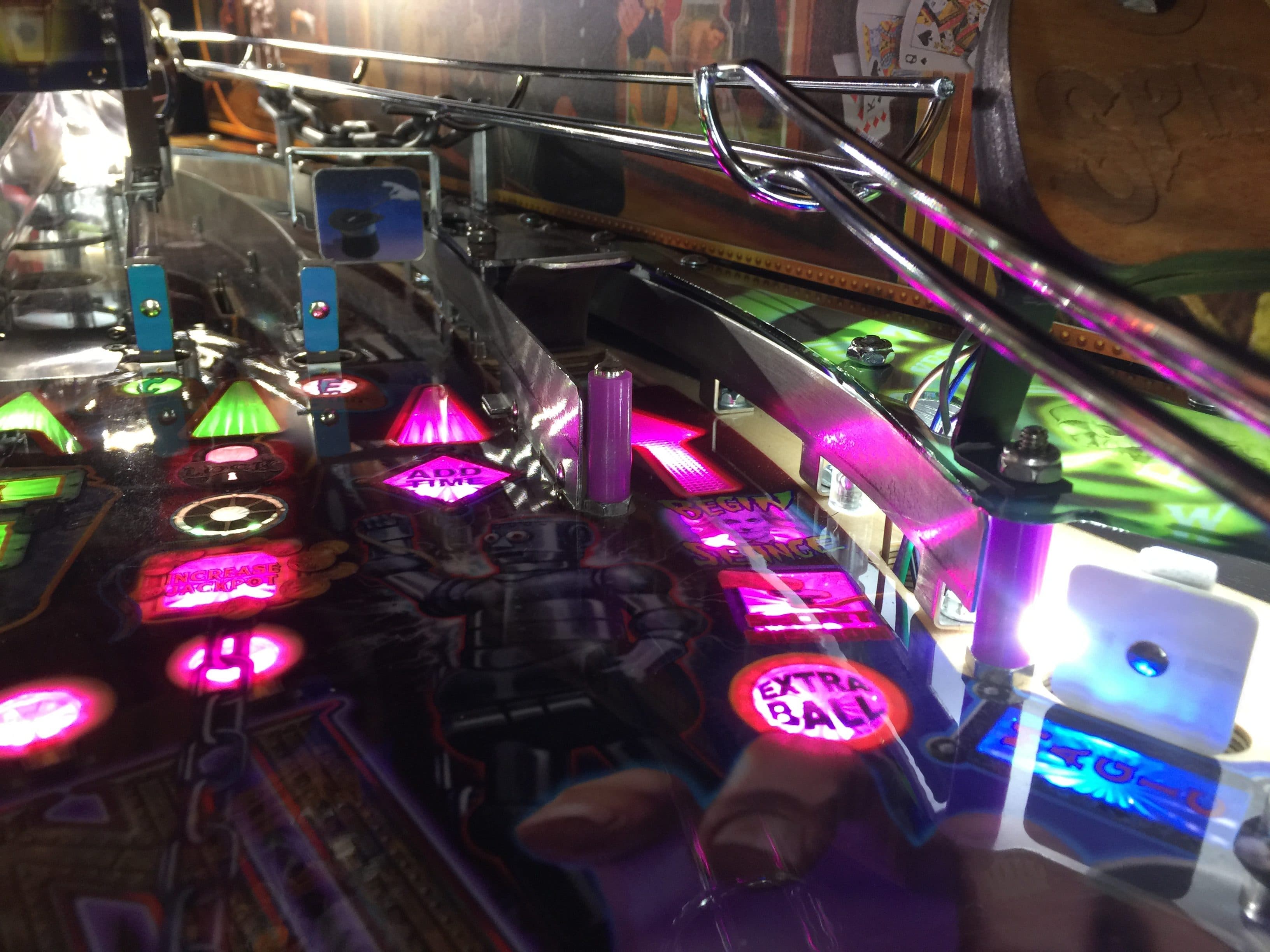
The layout feels unique but not foreign. As others have mentioned, some of the shots are tight, but typically misses still hit a stand-up target to help you advance. Also, some of the tight shots aren’t as tough as they first appear – for example, the shot for the right inner loop (to the catapult) is a difficult shot from the left flipper, but if you back hand it from the right flipper it isn’t difficult. The shots through the pops can difficult (as all shots through the pops seem to be!), but they are fun as well as there is a unique shot through the pops that steers the ball up to the theater, so you can hit the theater by shooting directly at it or through the pops.
While the thoroughness of the mode instructions are welcome, at times for modes that take several shots to complete, the instructions in the callouts seem overly long-winded (example).
This can likely be adjusted with coil settings or other tweaks, but in the test game the feed out of the scoop on the right was inconsistent and many times would bounce off the top of the right sling.
Of course this is subjective, but for those that love ramp shots there is only one true ramp shot in the game. (It IS a super smooth shot though!)
There is a ton of detail in the art throughout the entire playfield, the cabinet, and the translite. You can tell it took a ton of time and it does looks good. But not a fan of the face in the middle of the playfield. Maybe it could’ve been more “cartoony”?
Some of the background music features a laughing/giggling girl who could eventually get annoying in a home environment where she is easily heard (example).
Disclaimer: All opinions are subject to change because I’m fickle with pinball machines the more I play them 🙂

No comments yet. Sign in to be the first.